Introduction: The Timeless Power of a Gold Necklace
There is something almost magnetic about a gold necklace. Whether it is a fine, barely-there chain worn close to the throat or a bold, layered statement piece cascading down an open neckline, a gold necklace communicates something essential — about beauty, about identity, about the enduring human desire to adorn ourselves with the most precious things our world offers.
Gold necklaces are, without question, one of the most universally beloved pieces of jewelry in human history.
Today, the gold necklace market is more diverse, more creative, and more accessible than ever before. From simple everyday chains to elaborate gemstone-encrusted statement pieces, from minimalist pendants to bold layered looks, there is a gold necklace for every style, every occasion, every budget, and every story.
This guide is your comprehensive companion to the world of gold necklaces. We will explore their rich history, the remarkable variety of styles available, the craftsmanship that brings them to life, how to wear them with confidence, how to buy wisely, and how to care for them so they remain beautiful for decades — perhaps generations — to come.
Whether you are buying your first fine gold necklace or adding to a carefully curated collection, this guide will give you the knowledge and inspiration you need to make choices you will love for a lifetime.
Chapter 1: A Rich History — Gold Necklaces Through the Ages
The Ancient World’s Most Precious Adornment
The history of gold necklaces stretches back to the very dawn of civilization. Archaeological discoveries from ancient Mesopotamia — modern-day Iraq — have unearthed gold necklaces dating to approximately 2500 BCE, found alongside other treasures in the Royal Tombs of Ur. These early pieces, fashioned by craftsmen working without modern tools, display a sophistication and beauty that continues to astonish historians and jewelers alike.
The famous funerary treasures of Tutankhamun include spectacular gold necklaces of breathtaking craftsmanship, still radiant after more than three thousand years.
The ancient Greeks embraced gold necklaces with characteristic elegance and ingenuity. Greek goldsmiths were masters of techniques including granulation (tiny gold balls fused to create texture and pattern) and filigree (delicate wirework twisted into intricate designs). Greek gold necklaces often incorporated pendants representing mythological figures, animals, and natural forms — an early expression of the pendant necklace tradition that remains vibrant today.
The Romans — ever enthusiastic adopters of cultural practices from the civilizations they conquered — wore gold necklaces in profusion. Roman necklaces ranged from simple link chains to elaborate constructions incorporating pearls, colored gemstones, and intricate goldwork. The Roman fashion for layering multiple necklaces of different lengths is a trend that has returned with force in contemporary jewelry styling.
Gold Necklaces Through the Medieval and Renaissance Periods
They frequently appear in the portraits of Byzantine emperors and empresses, draped in multiple gold chains adorned with pearls and precious stones.
The Catholic Church’s enormous wealth meant that ecclesiastical gold jewelry — made for bishops, abbots, and high clergy — was among the finest of the era. Gold chains of office, signifying rank and authority, were a particularly significant form of gold necklace in medieval European culture.
The Renaissance brought an explosion of artistic creativity to jewelry design. The portrait paintings of this period show kings, queens, and aristocrats adorned with elaborate gold necklaces, often featuring large pendant stones and intricate figurative elements.
From the Baroque to the Belle Époque
The 17th and 18th centuries saw gold jewelry evolve alongside broader shifts in European art and culture. The Baroque period favored bold, dramatic pieces — heavy gold chains, large gemstones, dynamic compositions that reflected the era’s love of grandeur and movement. The subsequent Rococo period brought a lighter, more delicate aesthetic — gold necklaces with fine chains, pastel-colored stones, and playful motifs inspired by nature.
The 19th century was a golden age — quite literally — for gold necklaces. The discovery of major gold deposits in California (1848), Australia (1851), and South Africa (later in the century) made gold more available than ever before. Victorian jewelry culture embraced gold necklaces of every conceivable type: lockets containing miniature portraits, long sautoir chains, delicate seed pearl and gold necklaces, bold collar necklaces, and elaborate multi-strand compositions.
The Belle Époque (Beautiful Era), roughly 1871 to 1914, represents perhaps the peak of traditional gold necklace craftsmanship. Working for aristocratic and wealthy bourgeois clients in Paris, London, and St. Petersburg, jewelers produced gold necklaces of incomparable technical mastery and refined beauty. The great houses of this era — Cartier, Van Cleef & Arpels, Boucheron — were all established during this period, and their heritage remains central to the luxury gold jewelry market today.
The Modern Era
The 20th century brought radical change to gold necklace design. The Art Nouveau movement (1890s–1910s) introduced sinuous, nature-inspired forms. Art Deco (1920s–30s) embraced geometric precision and bold contrast. Mid-century modernism stripped jewelry to essential forms. The 1970s saw a dramatic return of yellow gold, worn in bold, chunky styles that reflected the decade’s expressive personality.
The late 20th and early 21st centuries have been defined by pluralism — virtually every historical style coexists in the contemporary marketplace. Minimalist fine gold chains sell alongside maximalist layered looks. Traditional craftsmanship exists alongside cutting-edge 3D-printed designs. The gold necklace has never been more diverse, more democratic, or more exciting.
Chapter 2: Types of Gold Necklaces — A Comprehensive Style Guide
Chain Necklaces
At the foundation of the gold necklace world lies the chain — a sequence of linked metal elements that can be worn alone or used to support a pendant. The variety of chain styles available is remarkable, each with its own aesthetic character and structural properties.
Cable Chain
The cable chain is perhaps the most fundamental of all chain types — a series of uniform oval links, alternating in orientation, creating a clean, classic rope-like appearance. Cable chains are versatile, flattering on all necklines, and available in an enormous range of thicknesses. A fine cable chain creates an almost invisible line of gold against the skin; a substantial cable chain makes a confident statement on its own.
Franco Chain
The Franco chain features square links with V-shaped ridges, creating a robust, highly reflective structure. Franco chains are typically associated with men’s jewelry but have been enthusiastically adopted in women’s jewelry in recent years, particularly for bold, chunky styling. The highly faceted surface of a Franco chain creates exceptional sparkle.
Wheat Chain (Spiga Chain)
The wheat chain — named for its resemblance to a stalk of wheat — features oval links arranged in a herringbone-like pattern, creating a slightly flat, very elegant chain. The wheat chain lies beautifully against the body and has a sophisticated, refined quality that suits formal and evening wear particularly well.
Pendant Necklaces
Pendant necklaces combine a chain with a suspended ornamental element — the pendant. The combination of chain and pendant creates endless design possibilities, as virtually any element can become a pendant
Locket Pendants
Lockets are hinged gold pendants that open to reveal a small interior space where photographs, locks of hair, or other personal mementos can be kept close to the heart. Lockets are among the most emotionally charged pieces of jewelry — intimate, personal, and deeply sentimental. They range from simple oval forms to elaborate engraved and jeweled pieces.
Cross Pendants
The cross is one of the most universally recognized symbols in jewelry, worn both as a statement of faith and as a purely aesthetic motif. Gold cross pendants range from simple, plain gold forms to elaborate diamond-set or enameled designs.
Initial and Letter Pendants
Personalized initial pendants — a single letter in gold, often set with diamonds or other stones — have enjoyed enormous popularity in recent years. They allow the wearer to carry something uniquely personal, connecting a piece of jewelry directly to their identity.
Statement and Collar Necklaces
At the bolder end of the gold necklace spectrum lie statement pieces — designs intended to be the centerpiece of an outfit and the primary focus of attention.
Collar Necklaces
Collar necklaces sit high on the throat, following the natural line of the collarbone or sitting just above it. In gold, collar necklaces create a regal, architectural presence. They work magnificently with off-shoulder or wide-necked garments and create a striking contrast against bare skin.
Bib Necklaces
Bib necklaces cover the front of the décolletage in a bib-like formation, typically featuring multiple layers or strands of gold and/or stones. They are dramatic, impactful pieces perfectly suited for special occasions and bold personal style.
Torque Necklaces
The torque (or torc) is one of the oldest forms of necklace — a rigid or semi-rigid open circle of twisted gold worn around the throat. Originally associated with ancient Celtic and Germanic cultures, the torque has been reinterpreted by contemporary designers in stunning modern forms.
Multi-Strand Necklaces
Multiple gold chains worn together — either attached at a clasp or layered independently — create a rich, textural, luxurious look. Multi-strand designs range from the formal and structured to the casual and fluid, depending on the chains used and the overall design.
Opera and Sautoir Necklaces
These are long necklaces — typically 28 inches or longer — that fall below the bust line. Sautoir necklaces (very long, often featuring a tassel or pendant at the end) were enormously fashionable in the 1920s and have returned periodically to favor ever since. Long gold chains can be worn as single long strands, doubled up for a layered effect, or knotted for a more casual look.
Chapter 3: Understanding Gold — Purity, Colors, and Quality
Gold Purity Explained
Gold in its pure form is too soft for everyday jewelry use. It would scratch, dent, and deform with normal handling. For this reason, gold used in jewelry is always alloyed — mixed with other metals — to improve its hardness and durability. The proportion of gold in the alloy is expressed in karats.
24 Karat Gold (24K): Pure gold — 99.9% gold content. Exceptionally beautiful and rich in color, but too soft for most fine jewelry applications. Used primarily in coins, bars, and some specialized cultural jewelry traditions.
22 Karat Gold (22K): 91.7% pure gold. Very high purity with a deep, rich gold color. More durable than 24K due to the small alloy content. Widely used in traditional Indian and Middle Eastern gold jewelry, where high gold purity is culturally important. Less common in Western fine jewelry because it is still relatively soft.
18 Karat Gold (18K): 75% pure gold — the international standard for fine jewelry. Offers an excellent balance of gold richness, durability, and workability. The gold content is high enough to give a beautiful, warm color while the alloy content (typically silver, copper, and other metals) provides sufficient hardness for fine craftsmanship. Marked as “750” in the European hallmarking system.
The Colors of Gold
The color of a gold alloy is determined by the specific metals mixed with the gold. The three principal gold colors in fine jewelry are:
Rose Gold
Rose gold — sometimes called pink gold or red gold — is created by alloying gold with copper. The higher the proportion of copper, the more intense the pink-red color of the resulting alloy. Rose gold became fashionable in 19th-century Russia and has experienced several waves of popularity since, including a major global resurgence in the 2010s that continues today.
Rose gold’s warm, blushing tone is widely considered flattering to a broad range of skin tones. It has a romantic, distinctly feminine quality while also appearing in contemporary, gender-neutral designs. One advantage of rose gold over white gold is that it does not require rhodium plating — the copper alloy provides its color naturally and consistently throughout.
Chapter 4: Choosing the Right Gold Necklace — A Buyer’s Guide
Defining Your Purpose and Lifestyle
The first step in choosing the right gold necklace is honestly assessing your lifestyle and intended use. A necklace that will be worn every day, through all the activities of a busy life, needs very different qualities from one that will be reserved for special occasions.
For everyday wear: Choose simpler, more robust designs. Heavier chain gauges are more durable than very fine chains. Secure clasps (lobster claw or box clasps with a safety mechanism) reduce the risk of loss. Lower karat golds (14K, 10K) are harder and more resistant to daily wear and tear. Avoid very delicate, intricate elements that might catch on clothing or break with frequent movement.
For special occasions: Here you can embrace more elaborate, delicate designs. 18K or 22K gold provides maximum beauty and prestige for occasions where the piece will be the center of attention. More complex settings, fine chains, and delicate pendant elements are entirely appropriate for pieces worn occasionally and with care.
For versatile, multi-purpose wearing: Consider designs that can be dressed up or down. A simple gold pendant on a medium-gauge chain, for example, works equally well with casual daywear and evening attire. The classic yellow gold cable chain necklace is perhaps the ultimate versatile piece.
Choosing Necklace Length
Necklace length dramatically affects how a piece sits on the body and how it relates to necklines and other clothing. Standard necklace lengths and their typical positioning are:
Collar (12–13 inches): Sits at the base of the throat. Works beautifully with open necklines and bare décolletage.
Choker (14–16 inches): Lies just above or at the collarbone. Enormously flattering, framing the base of the neck. Works with most necklines.
Princess (17–19 inches): The most popular and versatile length, falling just below the collarbone. Works with virtually every neckline and clothing style. The standard length for pendant necklaces.
Matinee (20–24 inches): Falls between the collarbone and the bust. A sophisticated, elegant length particularly suited to business and formal wear. Works beautifully with pendant necklaces featuring larger elements.
Opera (28–36 inches): Reaches to the solar plexus or below. Can be worn as a single long strand, doubled, or knotted for versatility. Particularly elegant with evening wear.
Rope (37 inches and longer): Falls below the bust.
Considering Necklines
The relationship between a necklace and the neckline of a garment is one of the most important considerations in jewelry styling. Different necklace styles complement different necklines.
V-necklines call for necklaces that echo and follow the V-shape — pendants on medium-length chains, Y-necklaces, or longer chains that naturally fall into a V.
Crew and round necklines work beautifully with chokers, collar necklaces, or princess-length chains — pieces that sit in clear contrast to the neckline.
Strapless and sweetheart necklines offer a wide canvas for necklaces. Statement collar pieces, wide bib designs, or simply a long elegant strand of gold all work beautifully.
High necklines (turtlenecks, mock necks) call for longer necklaces — opera or matinee lengths — that fall below the neckline and sit against clothing rather than skin.
Scoop necklines work well with princess-length chains and pendants that fall naturally into the curve of the neckline.
Setting a Budget
Gold necklaces span an extraordinarily wide price range — from well under a hundred dollars for simple fashion pieces to hundreds of thousands for significant jewelry house creations. Setting a clear budget before shopping prevents both frustration and overspending.
Within any budget, prioritize quality over quantity. A single, well-made gold necklace in appropriate karat for your budget will serve you better and longer than several cheaply made pieces. Key quality indicators include:
- The weight and feel of the piece (fine gold has a satisfying, substantial quality)
- The finish of the gold (even, smooth, consistent, with no visible seams or imperfections)
- The security and quality of the clasp
- The integrity of any stone settings
- Proper hallmarking indicating gold purity
Chapter 5: Gemstones in Gold Necklaces — Adding Color and Brilliance
Diamonds
Diamonds are the most universally desired gemstone in gold necklaces. A gold chain bearing a diamond pendant — whether a simple solitaire or an elaborate multi-stone design — is one of the most coveted pieces in fine jewelry.
When selecting diamonds for a gold necklace, the same four Cs apply as for any diamond jewelry: Cut (the most important factor for visual brilliance), Color (affecting warmth or coolness of appearance), Clarity (internal characteristics), and Carat weight (size).
For pendants worn at conversational distance, cut quality is paramount — a brilliantly cut diamond will dazzle from across a room. Clarity and color grades can be somewhat more moderate without sacrificing visible beauty.
Sapphires
Blue sapphires — the most classic variety — create a breathtaking contrast against yellow gold. The deep, velvety blue of a fine Ceylon or Kashmir sapphire against the warm glow of 18K yellow gold is one of jewelry’s most beautiful color combinations. Sapphires also occur in virtually every other color except red (which are rubies) — pink, yellow, orange, green, purple, and the spectacular padparadscha (a rare orange-pink) are all available.
Rubies
Rubies — the red variety of corundum — are among the rarest and most valuable of all colored gemstones. A fine ruby of deep red (“pigeon’s blood” is the most prized shade) set in yellow gold creates a piece of extraordinary richness and power. Ruby and gold is a combination with deep cultural significance in many Asian jewelry traditions.
Emeralds
The deep green of a fine emerald against yellow gold is one of the great classic combinations of fine jewelry. Emeralds have been beloved since ancient times — Cleopatra was famously passionate about emeralds. Fine Colombian emeralds are among the most valuable gemstones in the world, while Brazilian and Zambian emeralds offer beautiful alternatives.
Pearls
Pearls and gold have been combined in necklaces for thousands of years. This pairing has a timeless, classical elegance. Pearl necklaces with gold clasps, or pearl pendant necklaces on gold chains, speak of understated refinement. Akoya pearls (classic white, Japanese cultured pearls), South Sea pearls (larger, creamy white), Tahitian pearls (naturally dark, often with overtones of green, blue, or purple), and freshwater pearls (available in many shapes and colors) all pair beautifully with gold.
Other Gemstones
The range of gemstones used in gold necklaces is essentially limitless: amethyst, citrine, blue topaz, peridot, garnet, aquamarine, tourmaline, tanzanite, opal, turquoise, coral, and many others. Each brings its own color, character, and cultural associations. Semi-precious stones allow for beautiful, colorful gold necklaces at more accessible price points than fine precious stones.
Chapter 6: Styling Gold Necklaces — The Art of Wearing Them Well
The Solo Statement
Sometimes one perfect gold necklace is all you need. When wearing a single gold necklace as a statement piece — whether a bold collar, an elaborate pendant, or a substantial chain — the key is to let it shine without competition. Keep other jewelry minimal: perhaps simple stud earrings, a discreet ring. Allow the necklace to be the unambiguous center of attention.
The power of a single, well-chosen gold necklace worn alone should not be underestimated. It communicates confidence, taste, and a secure sense of personal style that overcrowded jewelry collections rarely achieve.
The Art of Layering
One of the most significant contemporary trends in gold necklace wearing is layering — wearing multiple necklaces simultaneously, in different lengths and styles, to create an intentional, curated look.
Done well, necklace layering is extraordinarily chic. Done poorly, it creates visual chaos. Here are the key principles of successful layering:
Vary the lengths significantly: The most effective layered looks use necklaces of notably different lengths — for example, a 16-inch choker, a 20-inch pendant chain, and a 26-inch long chain. If the lengths are too similar, the necklaces will tangle and create a muddy visual effect.
Mix textures and styles thoughtfully: A fine cable chain pairs beautifully with a slightly heavier rope chain and a beaded pendant. The contrast creates visual interest. However, too many competing elements become confusing — aim for coherence through a common theme (all gold, for example, or a consistent design aesthetic) while varying individual elements.
Use a mix of pendants and plain chains: Not every necklace in a layered look needs a pendant. A plain, beautiful gold chain in the middle of a layered look provides a breathing space between pendant elements and prevents the look from becoming too busy.
Consider color: Mixing yellow gold, white gold, and rose gold in a layered look can be stunning when done deliberately. However, mixing metals requires care — ensure there is a coherent reason for each choice, not just a random assortment of whatever is available.
Dressing Up and Dressing Down
One of the most appealing qualities of gold necklaces is their ability to traverse the spectrum from casual to formal with remarkable ease.
Casual looks: A simple gold chain, perhaps with a small pendant, transforms a basic T-shirt and jeans outfit into something more considered and polished. Gold jewelry against casual clothing creates a pleasing tension between luxury and ease that has defined some of fashion’s most celebrated aesthetics.
Professional settings: For business and professional environments, gold necklaces of moderate scale and understated design are entirely appropriate. A princess-length gold chain with a small pendant or a simple silk-wrapped gold chain communicates professionalism with personality.
Evening and formal occasions: Here, gold necklaces can be as dramatic as the occasion demands. A statement gold collar necklace transforms an evening gown. A long gold chain with a significant pendant adds gravitas to formal attire. Diamond-set gold pendant necklaces bring a level of sparkle and luxury perfectly suited to gala events and celebrations.
Styling by Skin Tone
Gold necklace color choices are deeply personal, but skin tone can be a useful guide:
Dark skin tones are magnificently complemented by yellow gold, which glows against deeper skin beautifully. Rose gold also creates a lovely warmth against darker skin tones.
Fair skin tones work beautifully with all gold colors. Rose gold creates a particularly romantic, soft aesthetic against fair skin, while yellow gold creates a more dramatic, warm contrast.
Chapter 7: Major Gold Necklace Trends
Trend 1: The Return of Yellow Gold
After years of white gold and platinum dominance, yellow gold has triumphantly reclaimed its position at the forefront of fine jewelry fashion. Contemporary designers are using yellow gold in both traditional and avant-garde ways, and buyers across all age groups have embraced its warmth and timelessness with renewed enthusiasm.
The resurgence of yellow gold reflects a broader cultural movement toward warmth, authenticity, and connection to tradition.
Trend 2: Maximalist Layering
As discussed, layering multiple gold necklaces has become one of the most influential jewelry trends of recent years. Social media — particularly Instagram and Pinterest — has accelerated this trend enormously, with influencers and celebrities sharing carefully curated “neck stacks” that inspire millions of followers.
The beauty of the layering trend is its democratic nature: it allows individuals to build their look gradually, adding pieces over time, and to express highly personal aesthetics through the specific combination of necklaces they choose. No two layered looks are identical.
Trend 3: Personalization and Meaningful Jewelry
The demand for personalized gold necklaces — initials, names, birthstones, coordinates of meaningful places, zodiac symbols — has grown enormously. Buyers increasingly want jewelry that tells their specific story, not generic pieces that could belong to anyone.
This trend reflects a broader shift in luxury goods consumption toward meaning and authenticity. A gold necklace bearing your child’s initial or a pendant set with your birthstone carries a dimension of personal significance that elevates it beyond mere ornament.
Trend 4: Chunky Chains
Heavy, bold gold chain necklaces — large-link designs that make an unapologetic statement — have become a major trend. These pieces borrow from the traditions of hip-hop jewelry culture, high fashion, and historical jewelry (the collar chains of the Renaissance, the massive gold pectorals of ancient Egypt), creating something that feels simultaneously ancient and very now.
Chunky gold chain necklaces have a powerful, confident quality that resonates with a contemporary desire for bold self-expression. They look equally at home with a tailored suit, an off-shoulder dress, or a simple white T-shirt.
Trend 5: Sustainable and Ethical Gold
Increasing consumer awareness of the environmental and social impact of gold mining has created strong demand for ethically sourced and sustainably produced gold necklaces. Recycled gold — melted down from existing gold objects — has zero additional mining impact and is chemically identical to newly mined gold. Fairtrade gold certification guarantees fair pay and safe working conditions for artisanal miners.
Many fine jewelry brands now offer gold necklaces made from certified recycled or Fairtrade gold, allowing buyers to enjoy the beauty and luxury of gold with the assurance that their purchase aligns with their values.
Chapter 8: Buying Fine Gold Necklaces — Expert Advice
Choosing a Reputable Jeweler
The quality of your gold necklace experience — from purchase to long-term ownership — depends significantly on choosing a reputable jeweler. Key indicators of a reputable fine jewelry retailer include:
Membership in professional associations: Jewelers of America, the American Gem Society, the National Association of Jewellers (in the UK), and equivalent bodies in other countries have membership standards that provide some assurance of professional conduct.
Knowledgeable, non-pressuring staff: A good jewelry retailer will have staff who can answer detailed questions about metal content, stone quality, and craftsmanship without resorting to high-pressure sales tactics.
Clear labeling and documentation: All gold and gemstone content should be clearly and accurately represented. Diamond certificates should be readily available for significant stones.
Transparent return policies: A confident, trustworthy retailer will offer clear, fair return and exchange policies.
Established track record: Look for retailers with substantial histories, consistent positive reviews, and visible community standing.
Online Shopping for Gold Necklaces
The online fine jewelry market is now mature and offers excellent options for informed buyers. However, shopping for gold necklaces online requires additional diligence compared to in-person shopping.
When shopping online, always verify:
- Exact gold purity (karat content) stated clearly
- Exact weight of gold in the piece (important for assessing value)
- Diamond or gemstone specifications and certifications if applicable
- High-resolution photography from multiple angles
- Detailed return policy (ideally 30 days or more)
- Secure, reputable payment processing
- Customer service availability (phone and email)
Read customer reviews carefully, paying attention to comments about build quality, accuracy of description, and after-sales service. A pattern of complaints about poor quality or inaccurate descriptions is a clear warning sign.
Authentication and Hallmarking
All genuine gold jewelry should be hallmarked. In the UK, for example, all gold articles above a certain weight are legally required to be hallmarked by one of the official assay offices — the Goldsmiths’ Company Assay Office in London, the Birmingham Assay Office, the Edinburgh Assay Office, or the Sheffield Assay Office.
Hallmarks typically include:
- A mark indicating the precious metal and its purity (e.g., “750” for 18K gold)
- The assay office mark
- The maker’s or sponsor’s mark
- In some systems, a date letter indicating the year of assay
In countries without mandatory assay office hallmarking, reputable jewelers voluntarily mark their pieces. In the United States, for example, the Federal Trade Commission (FTC) requires that any quality mark also be accompanied by the maker’s trademark.
When purchasing, examine the hallmarks — typically found on the clasp or a small tag attached to the piece — with a loupe if necessary. This simple verification step provides important assurance of authenticity.
Chapter 9: Caring for Your Gold Necklace
Daily Care and Smart Habits
Gold necklaces, unlike many other jewelry types, are frequently worn daily and therefore subject to the greatest wear. Developing good habits extends their beauty and life significantly.
Put your gold necklace on last after dressing, applying makeup, perfume, and hairspray. Many beauty products contain chemicals that dull gold and can affect stone settings over time.
Take it off first before showering, bathing, swimming, exercising, or doing physical work. Chlorine is particularly damaging to gold alloys and can cause brittleness and discoloration.
Avoid sleeping with your necklace on. Sleep movement can cause chains to tangle, link welds to fatigue, and clasps to open and lose the piece entirely.
Be mindful of weight: Very fine chains are vulnerable to breakage if caught or pulled. Being aware of this risk — particularly around small children — prevents accidents.
Cleaning Your Gold Necklace at Home
Regular at-home cleaning removes the buildup of skin oils, perfume residue, and environmental pollutants that gradually dull gold’s shine.
Simple cleaning method:
- Fill a small bowl with warm (not hot) water and add a few drops of mild dish soap
- Submerge the necklace and let it soak for 15–20 minutes
- Gently scrub with a very soft toothbrush, paying attention to chain links and any stone settings
- Rinse thoroughly under warm running water — do this over a plugged sink or bowl to prevent loss
- Pat gently dry with a clean soft cloth and allow to air dry completely before storing or wearing
Important don’ts:
- Do not use abrasive cleaners or cloths that might scratch the gold surface
- Do not use chlorine bleach or other harsh chemicals
- Avoid ultrasonic cleaners unless your jeweler specifically advises they are safe for your piece
- Do not dry with rough paper towels
Professional Cleaning and Servicing
- Thoroughly clean the piece using professional ultrasonic and steam equipment
- Inspect all chain links for fatigue or weakness
- Check any stone settings for security
- Polish and buff the gold surface to restore its original bright finish
- Check and adjust the clasp mechanism
- Reapply rhodium plating if the piece is white gold and the plating has worn
This service typically costs relatively little and is an investment in the longevity of a piece that may be significantly valuable.
Proper Storage
How you store your gold necklace when not wearing it matters enormously.
Avoid piling necklaces together: Gold chains tangle easily, and separating a badly tangled chain can cause damage to links and clasps.
Use a jewelry box with individual compartments or hooks: Hanging necklaces on individual hooks prevents tangling and maintains the chain’s form.
Soft lining: Jewelry boxes and pouches lined with soft materials (velvet, felt, microfiber) prevent scratching.
Separate from harder materials: Diamonds, for example, are hard enough to scratch gold. Storing diamond jewelry separately from gold chains prevents surface abrasion.
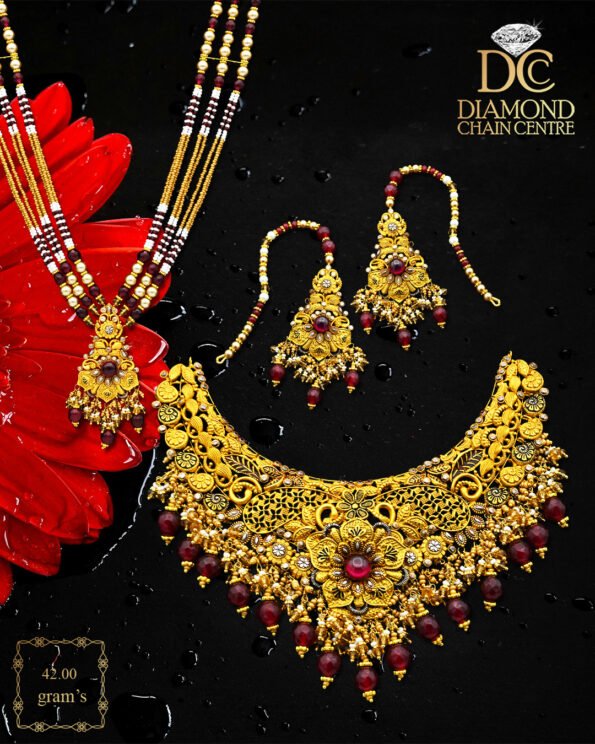
Chapter 10: Gold Necklaces as Gifts and Heirlooms
The Gold Necklace as a Gift
Few gifts communicate as eloquently as a gold necklace. It is luxurious without being ostentatious, personal without requiring intimate knowledge of the recipient’s wardrobe, and lasting without being sentimental in an intrusive way. A gold necklace says: I value you, I want to give you something beautiful, and I want that beauty to stay with you.
For her milestone birthday: A gold necklace chosen with care and knowledge of her style is a deeply appropriate birthday gift. Consider whether she wears yellow or white gold, whether she prefers minimalist or more elaborate pieces, and choose accordingly.
Gold Necklaces as Heirlooms
Perhaps the most profound argument for investing in a fine gold necklace is its potential to become a family heirloom — an object that carries not just monetary value but the weight of memory, love, and connection across generations.
Gold does not corrode, tarnish severely, or deteriorate with age when properly cared for. Diamonds and many other gemstones used in gold necklaces are among the hardest and most durable materials known. A well-made gold necklace purchased today could realistically be worn by your grandchildren — and their grandchildren.
The emotional value of a fine gold necklace passed from parent to child, from grandmother to granddaughter, from one generation to the next, transcends monetary considerations. It becomes a tangible connection between people who love each other across the boundaries of time — a thread of gold linking the generations.
Chapter 11: Gold Necklace Brands and What to Look For
Fine Jewelry Heritage Houses
Certain jewelry houses are synonymous with gold necklace excellence. While these prestigious brands command significant premiums over the intrinsic value of their materials, they offer verified craftsmanship, design heritage, and the prestige of the house’s history.
Houses such as Cartier, Van Cleef & Arpels, Bulgari, Tiffany & Co., Harry Winston, and Chopard have created gold necklaces that are among the most celebrated jewels in the world. Their designs often become icons, instantly recognizable and widely imitated.
Purchasing from these houses guarantees authenticity, exceptional craftsmanship, and the backing of the house’s international service network. These pieces are typically good long-term value due to the prestige premium they carry and their consistent quality.
Independent Fine Jewelers
A parallel world of exceptional quality exists in the workshops of talented independent fine jewelers who work at a smaller scale than the great houses but sometimes match or exceed them in craft and creativity.
Independent jewelers typically offer more personal service, more willingness to create custom pieces, and often more competitive pricing than branded houses. Finding a skilled independent jeweler whose aesthetic sensibility aligns with your own can be enormously rewarding.
Look for independent jewelers who are trained at recognized jewelry and goldsmithing schools, who are members of professional associations, who can show you examples of their work and provide references from satisfied clients, and who are transparent about the materials and methods they use.
Quality Indicators Beyond Brand
Whether buying from a heritage house, an independent jeweler, or an online retailer, the same fundamental quality indicators apply:
Weight and feel: Fine gold has a satisfying weight and a smooth, warm feel. Lightweight pieces that feel insubstantial are often made with thin gold plate or low-karat gold.
Consistency of finish: The gold surface should be uniformly finished — no visible seams, no patches of different color or texture, no rough areas.
Clasp quality: The clasp is the most mechanically stressed element of a necklace. A high-quality clasp (lobster claw, box clasp with safety tab, toggle) should operate smoothly and securely, with no looseness or stiffness.
Hallmarking: Always verify that proper hallmarks are present and legible.
Stone settings (if applicable): Check that all stones are secure, that settings are even and well-finished, and that there are no loose prongs or rough edges.
Conclusion: The Gold Necklace — An Investment in Beauty That Lasts Forever
But above all, a gold necklace is a deeply personal object.
Choosing a gold necklace — whether for yourself or as a gift — is an act that deserves care, knowledge, and genuine pleasure. This guide has attempted to give you the knowledge. The care and the pleasure are yours to bring.
We hope it has illuminated the extraordinary world of gold necklaces and inspired you to find — or create — a piece that will bring beauty and meaning to your life for many years to come.
Frequently Asked Questions (FAQ)
Q: What is the best karat of gold for a necklace? A: For most buyers, 18K gold offers the ideal balance of gold purity, beauty, and durability. It is the international standard for fine jewelry and provides a rich, warm color with sufficient hardness for everyday wear. 14K is a practical and beautiful alternative that is slightly more durable and more affordable.
Q: How do I know if a gold necklace is real? A: Look for hallmarks — stamped marks indicating gold purity (e.g., “750” for 18K, “585” for 14K). A reputable jeweler will always clearly state the gold content of their pieces and back it with proper hallmarking. If in doubt, any jeweler can test the metal using acid testing or electronic testing equipment.
Q: How long should a gold necklace last? A: A well-made gold necklace, properly cared for, should last indefinitely. Gold does not corrode or deteriorate over time. With regular professional servicing and sensible daily care, a fine gold necklace can be worn for decades and passed to future generations.
Q: Can I wear my gold necklace in the shower? A: It is best to avoid wearing gold necklaces in the shower. While gold itself is not harmed by water, soap, shampoo, and other products can dull the finish and accumulate in chain links and stone settings. Regular exposure also puts unnecessary stress on clasps and chain links.
Q: How do I untangle a gold chain? A: Place the tangled chain on a smooth, flat surface. Apply a very small drop of baby oil or olive oil to the tangle. Using two fine needles or pins, gently work the tangle apart from the outside inward. Never pull forcefully — this risks breaking fine links. Patience is essential.